
.png?crc=4271212285)
Autanamet - Autonomous analysis of metals used in horology heritage
1 September 2024 - 31 August 2025
___________________________________________________________
Heritage professionals responsible for horology collections identify the metals in the objects under their care based on their use, surface appearance, and the types of corrosion they develop, as well as on historical and technological data. These criteria, however, have their limitations. Furthermore, the core materials may have been plated with very similar metals, developed during the same period, and therefore difficult to distinguish. Consequently, identifying materials for documentation purposes—or even to improve their conservation conditions and/or apply appropriate conservation treatments—requires analysis. X-ray fluorescence spectrometry (XRF) is often used because it is non-invasive (no sampling required). However, it is costly and can only be performed by properly trained experts. Furthermore, it has the drawback of being relatively non-discriminating and of analysing the material being studied over a certain thickness (several micrometres), failing to distinguish the core metal from any surface plating. This can lead to errors in interpretation: German silver may be mistaken for nickel-plated brass, and vice versa.
Discovery Mat and its measurement system are a robust tool, but one that requires laborious data collection. Furthermore, it has been applied only to two major families of metals (copper-based and aluminium alloys). By optimizing the workflow associated with data collection and expanding the tool’s application to other horology metals, professionals in the field would have an instrument that validates their knowledge of materials and allows them to verify the authenticity of artefacts, the use of appropriate metals, and even the compliance of applied plating.
The project’s objectives were:
1. To develop an analytical protocol for metals in the horology sector—particularly historic artefacts—that takes into account the expertise of the relevant professionals and enables them to independently and efficiently conduct measurements using the Discovery Mat (DM) tool;
2. To improve the effectiveness and relevance of DM by expanding its database.
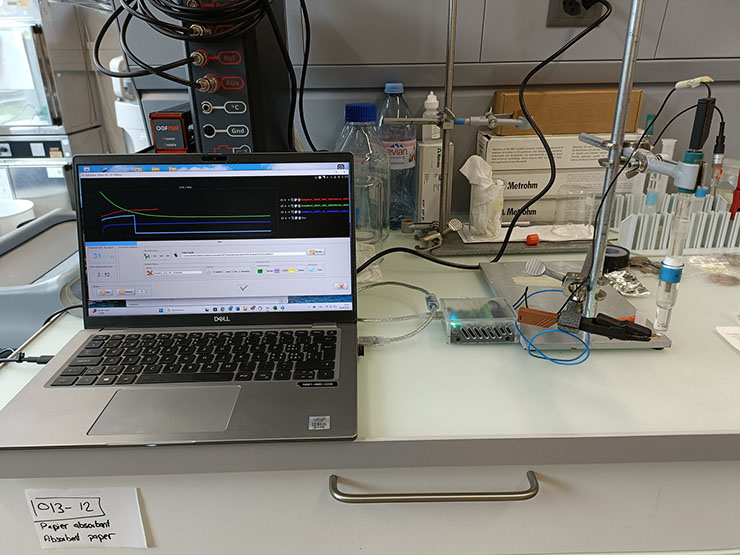
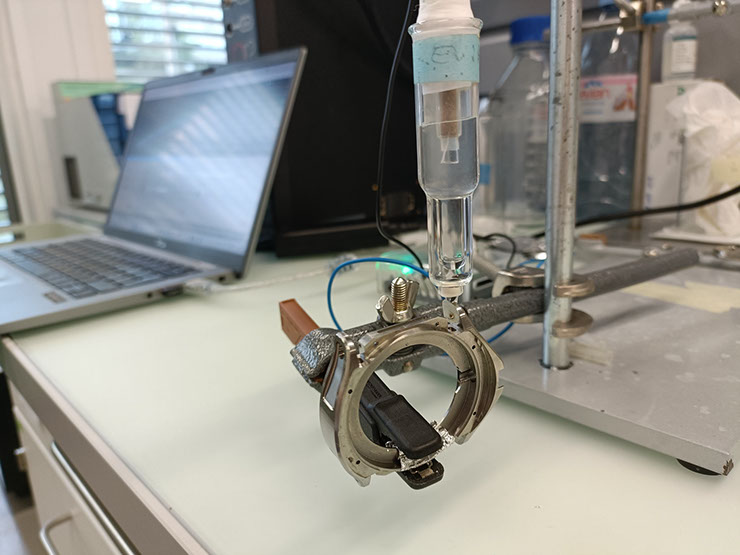
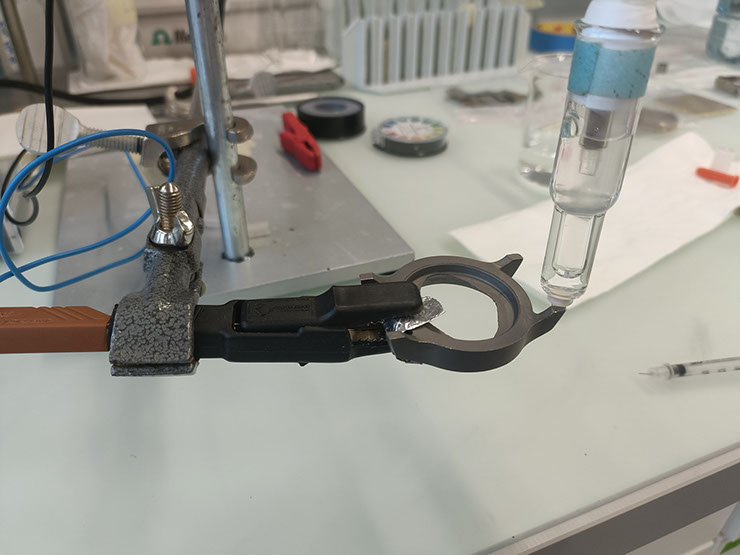
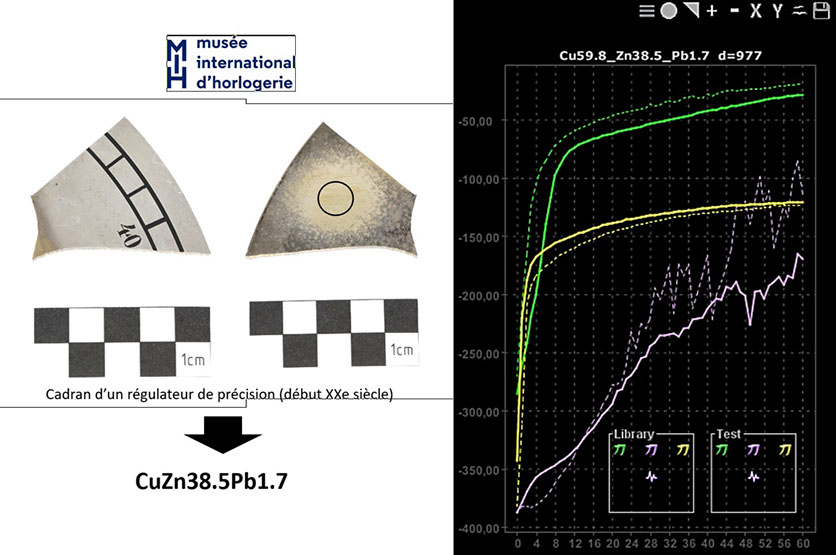
HE-Arc CR has compiled a collection of horology materials and objects—representative of analytical challenges that cannot be resolved through simple surface observation of the materials or consultation of historical data—in collaboration with industry professionals. At the same time, a software module was developed to facilitate data capture via DM, as well as its processing and analysis by non-experts, to improve the application’s performance, and to reduce analysis time. The representative horology materials were then analysed (electrochemically and using the XRF analyser) to be integrated into the DM database. The improved database was ultimately used to identify the metals in the collection of objects under consideration based solely on the electrochemical profiles. Finally, a marketing action plan was implemented to promote this tool to target and peripheral audiences.
This project was funded by HE-Arc - Pôle de compétence “Technologies et marchés horlogers » and was carried out in collaboration with HE-Arc’s management and engineering departments.
COST (European Cooperation in Science and Technology) is a funding agency for research and innovation networks. Our Actions help connect research initiatives across Europe and enable scientists to grow their ideas by sharing them with their peers. This boosts their research, career and innovation.
COST - Endless Metal © 2023 All Rights Reserved

Funded by
the European Union